
Last updated September 24, 2026
Free in-home measure and quote - PGT, CGI and CWS impact lines compared on your actual openings, style by style
 Before
 After
After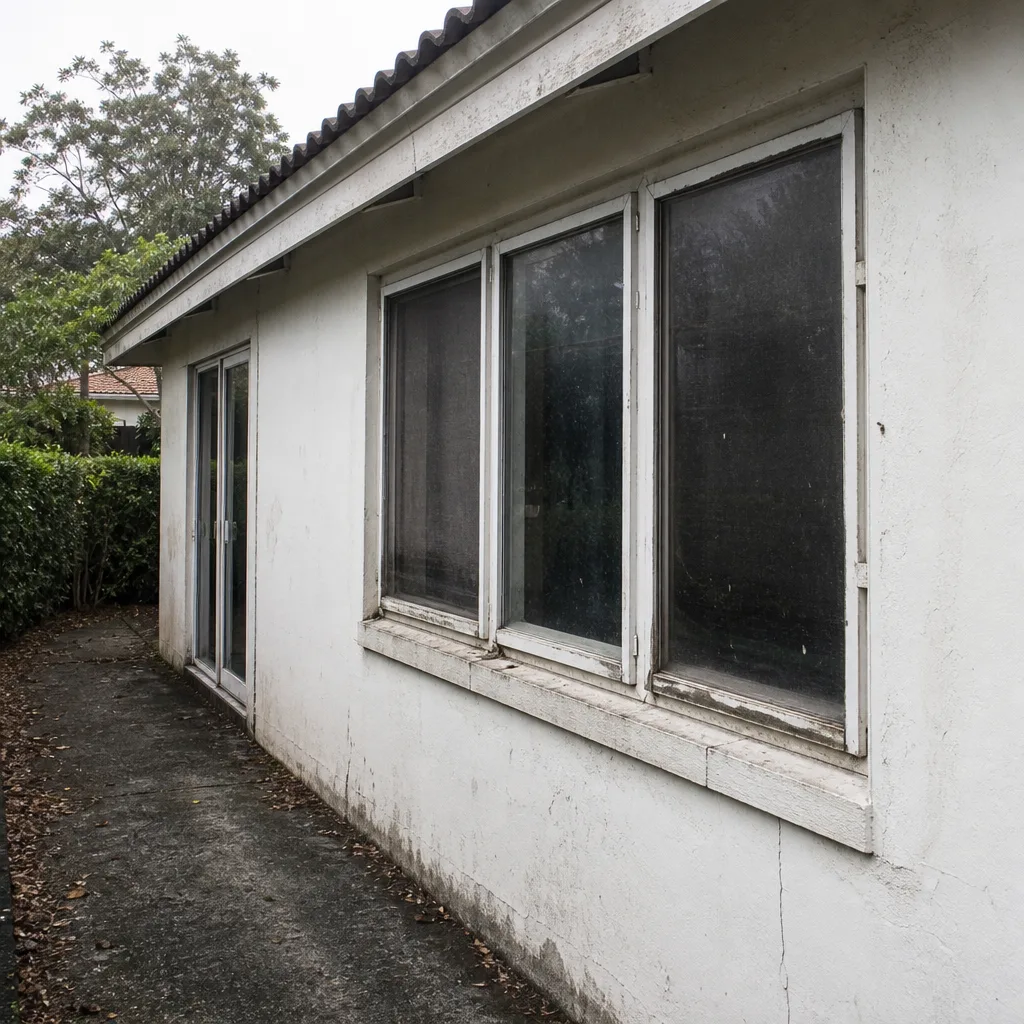 Before
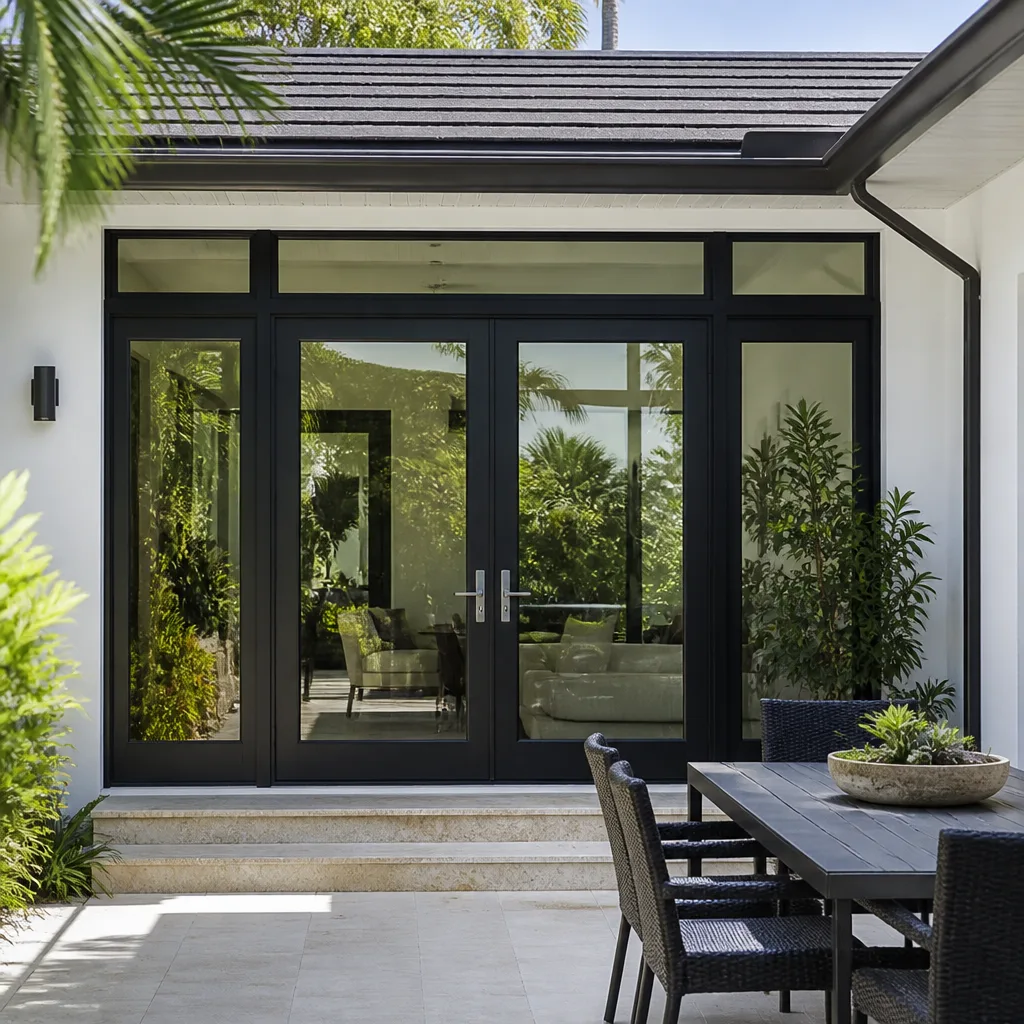 After
After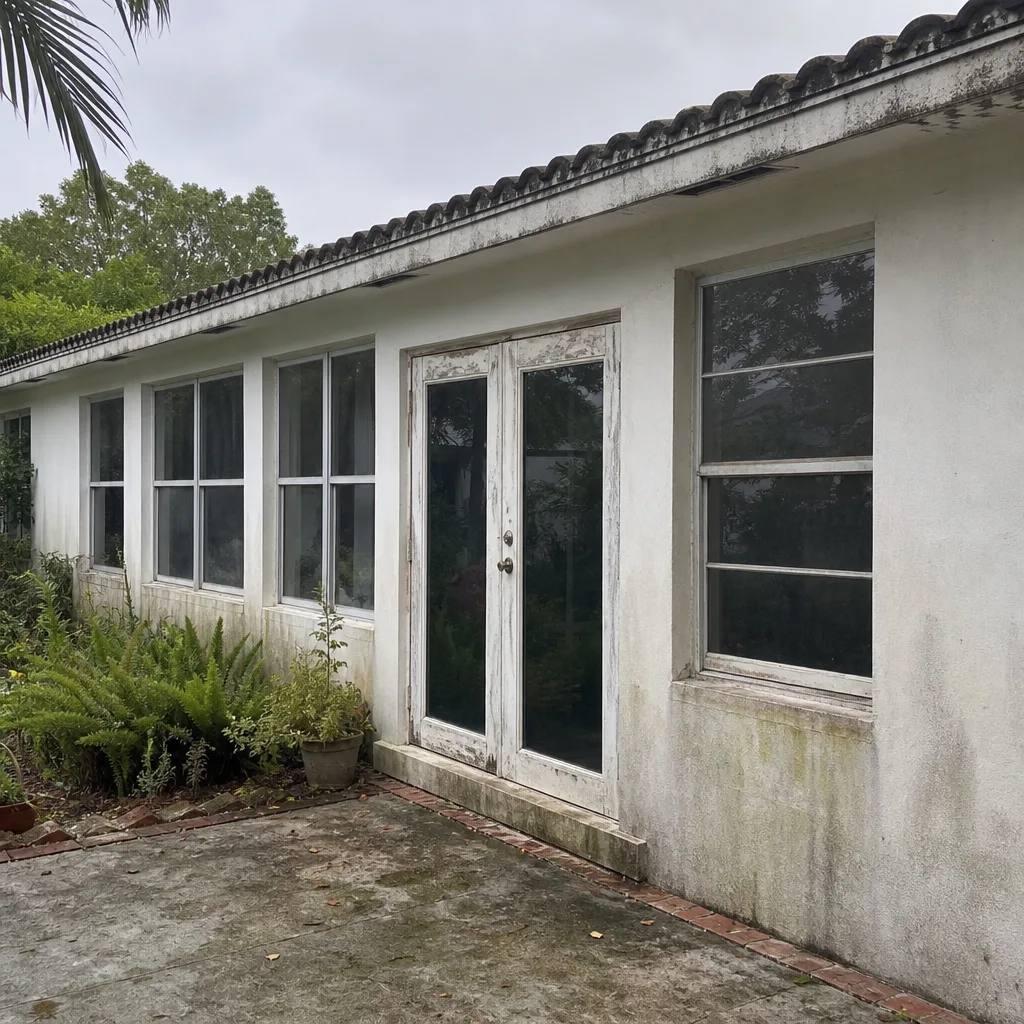 Before
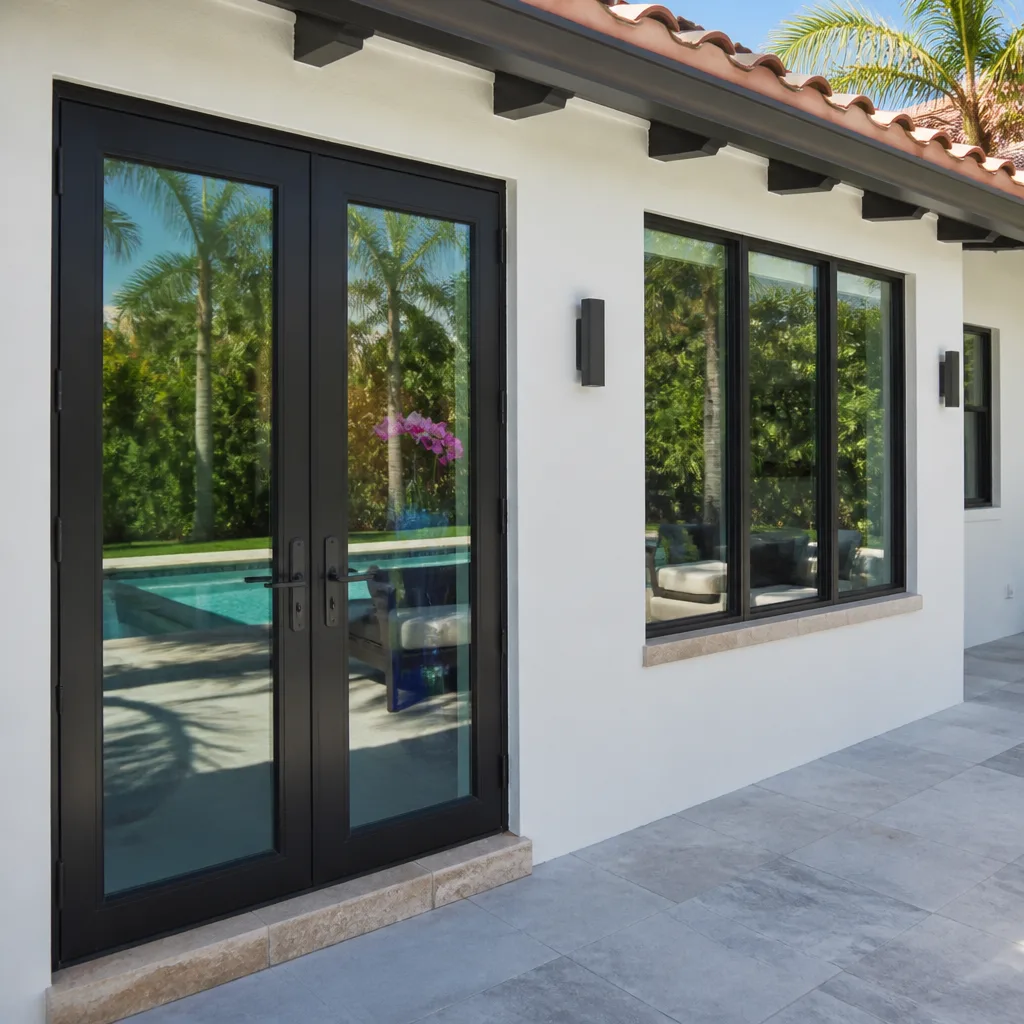 After
AfterWindows & Doors Warning Signs: A Pinecrest Homeowner’s Reference Guide
In Pinecrest, a window that “sticks a little” isn’t a nuisance. It’s a measurable indication that the rough opening has moved, and in a high-velocity hurricane zone, a frame that’s racked 3/16 inch out of plumb no longer meets the deflection tolerance its Notice of Acceptance was tested to. Most homeowners look for cracked glass or water stains. The critical failures begin invisibly: galvanic corrosion at stainless-to-aluminum fastener points, glazing bead separation from salt-air cycling, and weep holes blocked by limestone scale from Pinecrest’s high-mineral irrigation runoff. This guide teaches you to read these pre-failure signs, measure frame squareness yourself, and know when a condition moves from monitor to do-not-operate. For the full picture on protecting your home, see The Complete Guide to Windows & Doors in Pinecrest.
Quick Answer
The warning signs that matter most in Pinecrest homes are subtle dimensional changes and sealant failures that compromise hurricane resistance before anything visible breaks. Homeowners should monitor for operational changes (sticking, drafts, condensation patterns), inspect within 30 days for frame racking over 1/8 inch or sealant separation, and stop operating any window or door that shows glazing bead detachment, cracked impact glass, or visible water intrusion at the sill. Sightline Windows & Doors Pinecrest provides free written estimates and documented photo records for every assessment.
Table of Contents

- The Three-Tier Warning System: Monitor, Inspect, Do Not Operate
- Four Warning Signs Found Only in Salt-Air Coastal Environments
- Reading Condensation Patterns: Frame vs. Glass Center
- How to Measure Frame Squareness and When It Fails Miami-Dade Standards
- Cosmetic vs. Structural Sealant Failure: What the Crack Tells You
- Operational Warning Signs: What Sticking, Sagging, and Drafts Reveal
- Common Mistakes to Avoid
- When to Call a Professional
- Frequently Asked Questions
 Before
 After
AfterThe Three-Tier Warning System: Monitor, Inspect, Do Not Operate
Not every warning sign demands immediate action. Misreading the urgency wastes money and attention; underreading it risks the structural integrity that Miami-Dade County’s hurricane code requires. We’ve organized what we see in Pinecrest field surveys into three tiers, each with specific observable criteria you can verify without tools for the first two tiers.
Tier 1: Owner-Monitor (Check Quarterly)
These conditions indicate change but not imminent failure. Document with dated photos and recheck in 90 days.
- Increased operational effort: A sash that required one hand now needs two, or a sliding door that glided now requires shoulder pressure. Measure this subjectively and note the change.
- Condensation on glass exterior surface: In Pinecrest’s humid months, exterior condensation on the outer glass face indicates the low-E coating is performing (reflecting interior heat). This is normal, not a warning sign. Interior condensation is different (see the condensation section below).
- Minor sealant surface checking: Hairline cracks in the exposed bead of silicone or polyurethane that do not penetrate to the substrate, with no visible separation from the frame or wall. The sealant still adheres on both sides.
- Weep hole debris: Visible accumulation of dust or leaf litter at the exterior weep slot, but water still drains when you pour a cup against the sill track.
Tier 2: Schedule Inspection Within 30 Days
These conditions indicate measurable degradation that may affect performance under wind load. A professional assessment should include frame squareness measurement, fastener torque check, and sealant adhesion test. See How to Hire a Windows & Doors Contractor in Pinecrest: A Step-by-Step Guide for what to expect.
- Frame racking visible to eye: The diagonal corner-to-corner measurement differs by more than 1/8 inch, or the sash visibly tilts in the frame when closed. See the measuring section for the tape-measure method.
- Sealant separation from one substrate: The sealant bead has detached from either the frame OR the wall, creating a visible gap you can probe with a putty knife. Water has a path.
- Interior condensation on frame members: Moisture collecting on the aluminum or vinyl frame itself, not the glass, indicates thermal bridging or insulation failure in the frame chamber.
- Sill track staining that persists: Brown or white streaks in the sill track that remain after cleaning, indicating either galvanic corrosion products or mineral deposits from weep system backflow.
- Weatherstrip compression set: The flexible gasket no longer rebounds when depressed; it stays indented. Drafts at the sash perimeter confirm the diagnosis.
Tier 3: Do Not Operate - Call for Assessment
These conditions indicate that the assembly may fail under design load or has already lost its hurricane resistance rating. Do not force operation. Do not apply temporary sealant and wait.
- Glazing bead detachment: The vinyl or aluminum retaining strip that holds the glass in the frame has separated at any point. In impact-rated units, this is a structural failure; the glass is no longer retained under negative wind pressure.
- Cracked impact glass: Any fracture in laminated or insulated laminated glass, even if the inner lite is intact. The interlayer is compromised and will not perform as tested.
- Visible water intrusion at interior sill or jamb: Staining, bubbling paint, or actual water on the interior side during rain. The drainage path is blocked or the flashing integration has failed.
- Frame racking exceeding 3/16 inch: Measured diagonally, this exceeds the deflection tolerance most Pinecrest impact window NOAs were tested to. The unit may rack further under wind pressure and eject the sash.
- Corroded fastener heads with frame movement: You can wiggle the frame at the fastener location, or the fastener head is visibly degraded. The frame is no longer anchored to the structural opening.
In our experience across Pinecrest neighborhoods from Snapper Creek to the eastern edge near Palmetto Bay, Tier 3 conditions most often follow unreported Tier 2 conditions that homeowners managed with temporary measures rather than calling a professional. If you’re weighing whether to DIY or call in help, our DIY vs Professional Windows & Doors: The Pinecrest Homeowner’s Decision Guide breaks down when each approach makes sense. The 365-Day Done Right Promise under our Haven Standard exists because we’ve seen what delayed action costs: not just the window, but the wall cavity, the flooring, and the structural integrity of the rough opening.
Four Warning Signs Found Only in Salt-Air Coastal Environments
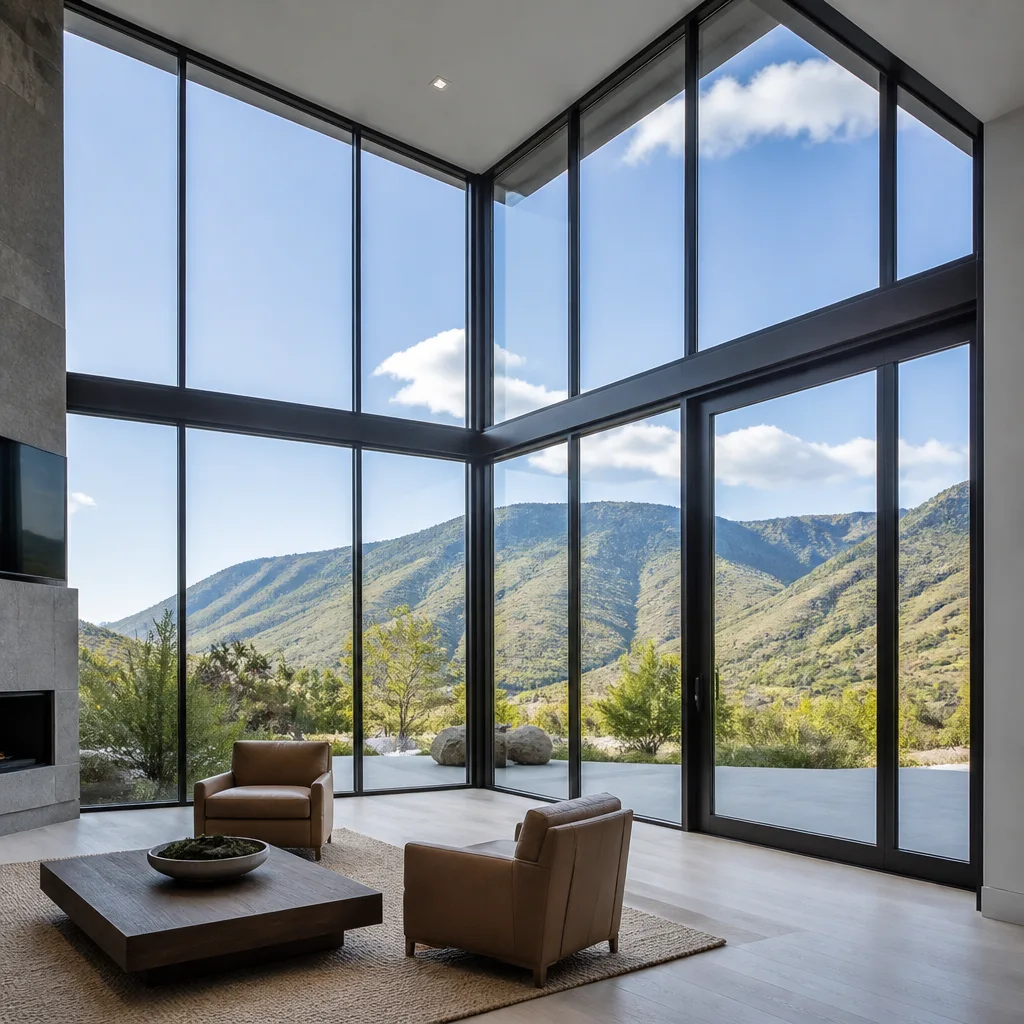
Generic window guides miss what Pinecrest’s location, 15 miles inland but fully within Miami-Dade’s salt-air corrosion zone, does to assemblies. These four conditions do not appear in inland Florida guides because they do not occur there with the same mechanism or severity.
1. Galvanic Corrosion at Fastener Points
Stainless steel fasteners in aluminum frames create a galvanic couple when salt-laden moisture bridges the two metals. In Pinecrest, this accelerates where irrigation systems overspray windows or where afternoon sea breezes deposit aerosol salt on east-facing elevations. What you’ll see: a white or gray powdery bloom around screw heads, often with surrounding aluminum pitting. What it means: the fastener is losing cross-section and torque retention. In our surveys of homes near Pinecrest Gardens and the Snapper Creek area, east-facing installations show this 3-4 years earlier than west-facing, all else equal. The fix is not replacement with “better” stainless; it’s isolation with a compatible washer and periodic inspection, or specification of properly isolated fasteners at installation. Window Installation in Pinecrest by Sightline includes fastener specification by elevation exposure under Haven Clause 1: Have it in writing.
2. Sill Track Staining Patterns
Pinecrest’s water table and irrigation practices create two distinct staining signatures. Brown-orange streaks indicate ferrous corrosion from steel components (rollers, balance shoes, or sub-sill flashing contact). White crystalline deposits indicate calcium and magnesium precipitation from evaporated hard water, common with well-irrigation overspray. The diagnostic value is in location: staining concentrated at the sill track center suggests drainage blockage; staining at the track ends suggests frame deflection creating low points. Either pattern, if persistent after cleaning, warrants inspection of the weep system and frame level.
3. Glazing Bead Separation
The vinyl or TPV glazing beads that retain glass in aluminum frames harden and shrink faster in salt-air UV exposure. In Pinecrest, we’ve measured bead pull-away beginning at 8-10 years on south and west elevations, compared to 12-15 years on protected north faces. Early signs: the bead no longer seats flush at corners; you can depress it with a fingernail and it does not rebound. Advanced signs: visible gap between bead and frame leg, or bead ends that have pulled from their interlocks. This is always a Tier 3 condition in impact-rated units; the bead is a structural component in negative-pressure design.
4. Weep Hole Blockage Indicators
Pinecrest’s high-mineral water and dense canopy produce a specific blockage mechanism: limestone scale from evaporated irrigation water, combined with organic debris, forms a cemented plug in weep slots. Unlike simple leaf blockage, this requires mechanical removal. Warning signs: water pooling in the sill track during moderate rain, or water sheeting on the exterior sill instead of draining through visible slots. A functional weep system should clear a cup of water poured into the track within 30 seconds. Slower drainage indicates partial blockage; no drainage indicates complete blockage and imminent sill cavity water intrusion.
Reading Condensation Patterns: Frame vs. Glass Center
Condensation location is diagnostic. Homeowners often misread all moisture as “the seal failed,” but the pattern tells you whether the issue is seal integrity, thermal performance, or interior humidity management.
Condensation on Glass Center (Interior Surface)
Moisture forming in the center of the glass interior surface, not at the edges, indicates that the glass surface temperature has dropped below the interior dew point. In Pinecrest’s cooling-dominant climate, this most often occurs in winter when exterior temperatures drop into the 50s and interior humidity remains high. The glass is performing as a conductor; the low-E coating is not failing. Solutions: reduce interior humidity (dehumidification, ventilation), or upgrade to a lower U-factor unit with better insulating glass. We specify PGT and CGI lines with U-factors down to 0.25 for Pinecrest homeowners with persistent winter condensation.
Condensation on Glass Edges (Interior Surface)
Moisture forming in a 2-3 inch band around the glass perimeter indicates seal failure in the insulating glass unit. The desiccant in the spacer has saturated, and the edge seal is breathing exterior moisture into the air space. You may also see a faint rainbow or oil-slick appearance in the glass center before visible condensation; this is hydrocarbon outgassing from failed sealant. This condition is progressive. The unit will eventually show permanent interior fogging. Replacement of the glass unit is required; the frame is typically salvageable.
Condensation on Frame Members
Moisture on the aluminum or vinyl frame itself, not the glass, indicates thermal bridging at the frame or failure of the thermal break in aluminum units. In Pinecrest, this is most common on non-thermally-broken aluminum windows installed before the 2010 energy code adoption, or where the thermal break has separated due to frame racking. The frame is colder than the dew point. This is a frame performance issue, not a glass issue, and typically requires full frame replacement to correct. Window Replacement in Pinecrest assessments include infrared surface temperature mapping to confirm the diagnosis.
Condensation Between Glass Panes
Visible moisture or fogging in the air space between lites is unambiguous seal failure. The unit has lost its argon or air fill and its desiccant is saturated. Energy performance is degraded; in impact units, the structural performance of the laminated lite may still be intact, but the insulating value is gone. Document with photos for warranty claim; most IG unit warranties are 10-20 years from manufacture date, found etched in the glass corner.
How to Measure Frame Squareness and When It Fails Miami-Dade Standards
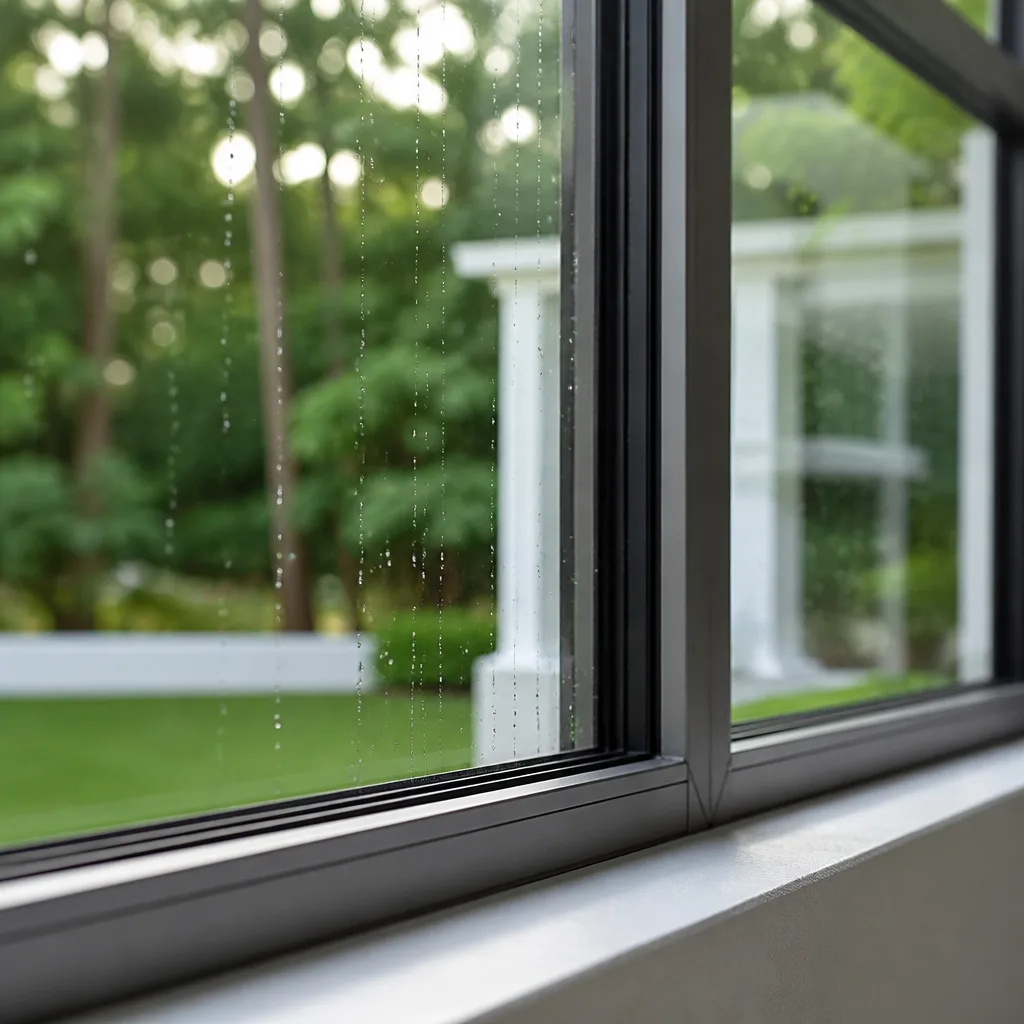
This is the measurement competitors don’t teach homeowners. A racked frame is not merely “settled”; it’s a structural condition that may void the window’s hurricane rating and accelerate every other failure mode.
Tools Needed
- 25-foot tape measure, metal blade, with 1/16-inch graduations
- 4-foot level (optional, for plumb check)
- Notepad for documentation
Step-by-Step Measurement
- Measure the diagonals. Hook your tape to the interior corner where the sill meets the jamb. Measure to the opposite interior corner where the head meets the opposite jamb. Record this as Diagonal A. Repeat for the other diagonal, Diagonal B.
- Calculate the difference. Subtract the smaller from the larger. This is your rack dimension.
- Measure the opening width. At the sill, mid-height, and head. Record all three. Variation over 1/8 inch indicates frame deflection or rough opening movement.
- Check plumb (optional). Hold the level against each jamb. Note any gap at top or bottom. A jamb out of plumb by more than 1/4 inch in 8 feet contributes to operational binding.
Interpreting the Numbers
| Rack Dimension | Condition | Action |
|---|---|---|
| 0 to 1/8 inch | Within manufacturing tolerance | Monitor quarterly |
| 1/8 to 3/16 inch | Exceeds installation tolerance; may affect weatherstrip seal | Schedule inspection within 30 days |
| Over 3/16 inch | Exceeds typical NOA deflection tolerance for impact units | Do not operate; professional assessment required |
The 3/16-inch threshold derives from Miami-Dade NOA test protocols. Impact windows are tested with the frame anchored to a rigid test buck. In service, if the rough opening has settled or the frame has racked beyond the tested deflection, the sash may not remain seated under negative pressure. We’ve documented this in Pinecrest homes built during the 2004-2007 construction wave, where fill settlement and tree-root pressure have moved rough openings measurably in 15-20 years.
Sightline’s measured survey, which the customer keeps under Haven Clause 1, includes these four measurements on every assessment. The written quote references the survey document; they cannot differ.
Cosmetic vs. Structural Sealant Failure: What the Crack Tells You
Sealant is the primary water and air barrier between window frame and wall. In Pinecrest’s exposure, it degrades predictably, but not all cracking is failure. Learning to read the crack pattern prevents unnecessary resealing and catches real failures before they reach the wall cavity.
Cosmetic Surface Checking
Characteristics: hairline cracks, less than 1/32 inch wide, confined to the exposed surface of the sealant bead, with no visible separation from either the frame or the wall. The sealant remains bonded on both interfaces. Common after 5-7 years in south Florida UV. Action: monitor annually; reseal when checking extends to the substrate or water testing shows migration.
Adhesive Failure (Separation from One Substrate)
Characteristics: the sealant has detached from either the window frame OR the wall, creating a visible gap you can insert a putty knife into. The sealant bead itself is intact but no longer bridges the joint. This is a water path. In Pinecrest, we see this most often on west-facing elevations where daily thermal cycling stresses the bond, and on installations where the substrate was not properly primed. Action: schedule repair within 30 days; water is entering or will enter with the next wind-driven rain.
Cohesive Failure (Split Within the Bead)
Characteristics: the sealant has torn internally, with material remaining on both substrates but a visible split through the bead center. This indicates the sealant was asked to accommodate more movement than its rated joint width, or it has aged beyond elastic recovery. Common at head joints of large fixed windows in Pinecrest, where thermal expansion is greatest. Action: professional assessment; the joint may need backer rod and redesign, not just surface resealing.
Complete Detachment or Missing Bead Sections
Characteristics: sealant is absent from portions of the joint, or crumbles to the touch. This is structural failure; the barrier is gone. Action: do not rely on temporary measures; the opening requires complete resealing and possibly frame assessment if water has reached the rough opening. Document with photos for insurance if interior damage has occurred.
Our Haven Standard requires photographic documentation of sealant condition on every visit, not as an upsell but as standard evidence. The customer receives these photos with the written assessment.
Operational Warning Signs: What Sticking, Sagging, and Drafts Reveal

Operational changes are early indicators of dimensional change. The mechanism that worked smoothly when installed is a sensitive detector of frame movement, hardware wear, and seal degradation.
Sticking or Increased Operating Force
A sash or panel that requires noticeably more force to open or close indicates one of several conditions: frame racking (sash no longer square to frame), hardware wear (roller or hinge degradation), or accumulated debris in the track. Differentiate by pattern. If the binding is uniform around the sash perimeter, suspect frame racking. If localized to one corner, suspect corner joint failure or fastener withdrawal. If intermittent or load-dependent, suspect roller wear in sliding units. In Pinecrest’s salt air, we’ve seen hinge pins seize in 4-5 years on non-marine-grade hardware.
Sagging in Sliding Doors
A sliding door that drops at the handle end when opened indicates roller failure or sill track wear. Check: does the panel lift when you apply upward pressure at the lock stile? If yes, the rollers have collapsed or the adjustment has migrated. If the panel does not lift and the sag is structural, the frame itself may have deflected. Therma-Tru and ViewLux multi-slide systems we install include adjustable stainless-steel roller carriages rated for the panel weight; proper adjustment is part of the documented handover under Haven Clause 4: Evidence on every job.
Drafts at Perimeter or Meeting Stile
Air movement at the sash perimeter indicates weatherstrip compression set, frame racking that has opened a gap, or hardware that no longer pulls the sash tight against the seal. The draft test: hold a lit incense stick or thin ribbon near the perimeter on a breezy day; movement indicates a path. Location matters. Drafts at the head suggest frame deflection or missing sealant; at the sill, track wear or weep system compromise; at the meeting stile of a double unit, lock or keeper misalignment. Door Installation in Pinecrest by Sightline includes operational force measurement and draft testing in the final walkthrough, with readings documented in the photo record.
Noise Transmission Increase
A window that suddenly seems to let in more exterior noise, particularly low-frequency traffic or aircraft sound, may have lost its insulating glass seal (the air space provides acoustic damping) or developed frame gaps that bypass the glass entirely. This is often the first symptom homeowners notice before visible condensation appears.
Common Mistakes to Avoid
- Applying silicone sealant over failed sealant without removal. The new bead bonds to the old, which is already detached from the substrate. Water continues behind both layers. In Pinecrest’s humidity, this traps moisture against the frame and accelerates corrosion.
- Force-operating a stuck window. The operating force required for a properly functioning casement is 15-20 lbf per AAMA standards. Exceeding this by forcing the crank damages the operator mechanism, the sash corner joints, and potentially the frame. If it sticks, stop and diagnose.
- Interpreting all condensation as “the seal failed.” As detailed above, location is diagnostic. Misdiagnosis leads to unnecessary glass replacement when the issue is humidity management or frame thermal bridging.
- Ignoring east-facing elevations. Pinecrest’s afternoon sea breeze deposits salt aerosol on east and southeast faces that inland guides don’t account for. These elevations need more frequent inspection, not equal treatment with protected faces.
- Assuming impact glass cracks are “just cosmetic.” Any crack in laminated glass compromises the interlayer’s ability to retain fragments under impact. The NOA is void; the insurance coverage may be compromised; the safety function is degraded.
- Measuring only one diagonal. Both diagonals must be measured and compared. A single diagonal measurement tells you length, not squareness. We’ve found homeowners and even some contractors miss racking because they measure only the long diagonal.
- Waiting for “the rainy season” to address Tier 2 conditions. In Pinecrest, a summer afternoon thunderstorm can deposit 2 inches of rain in 30 minutes with wind gusts to 40 mph. A frame with adhesive sealant failure or partial weep blockage will fail under that load. Schedule before June.
When to Call a Professional
Call for assessment when any Tier 3 condition appears, when Tier 2 conditions persist or worsen over 30 days, or when you measure frame rack exceeding 1/8 inch and cannot determine if it’s progressing. In Pinecrest’s high-velocity hurricane zone, the cost of professional assessment is negligible against the cost of water intrusion, mold remediation, or failed impact protection.
Sightline Windows & Doors Pinecrest offers free estimates in Pinecrest. Explore our more guides & resources for additional homeowner guidance. Every assessment includes the measured survey you keep, a written price before any work starts, and a documented photo record. Our technicians are background-checked, uniformed, and identified by license number before arrival, per Haven Clause 3: Verified crews. Call (786) 442-3200 to schedule.
Frequently Asked Questions
Professional window assessment in Pinecrest typically ranges from free (included with estimate) to $150-$250 for a standalone diagnostic visit with written report. Repair costs depend on condition: sealant replacement runs $8-$15 per linear foot, hardware replacement $75-$250 per sash, and full frame replacement for a standard residential window ranges from $800-$1,800 installed for vinyl, $1,200-$2,800 for aluminum impact-rated units. Call (786) 442-3200 for an exact quote - estimates are free, and we provide a Free Second Opinion on any written estimate from another contractor.
No. Under Haven Clause 1, the written price and the measured survey are the same document. The scope, specifications, and price are fixed before any work begins. If concealed damage is found (rot in the rough opening, for example), we document it, stop work, and provide a written amendment for your approval. No surprises.
A typical single-window replacement takes 4-6 hours; a whole-house project of 15-20 openings is usually completed in 2-3 days, depending on stucco repair and interior trim requirements. Permits, when required for structural changes or impact upgrades, add 2-4 weeks to the start date. Sightline pulls all permits and schedules inspections as part of the fixed scope.
Yes, when required by Miami-Dade County or Pinecrest building code. Permit requirements depend on the scope: like-for-like replacement in the same opening typically does not require permit; changes to opening size, conversion to impact-rated units, or structural modifications do. We determine permit requirements during the measured survey and include permit costs in the written price.
Pinecrest’s specific conditions include higher irrigation-water mineral content affecting weep systems, denser tree canopy contributing to organic debris loading, and a concentration of homes built 2004-2007 that are now entering the 15-20 year window for rough-opening settlement and original sealant failure. The salt-air exposure, while slightly less severe than coastal Key Biscayne, is still significant enough to accelerate galvanic corrosion on east-facing elevations.
Check the permanent mark on the glass or frame for the NOA number and date. If your windows were installed before 1994, they predate the Miami-Dade impact standards and do not meet current code. If installed 1994-2010, they may meet the standard in force at that time but not current HVHZ requirements. A professional assessment can verify the rating and whether the installation method (fastener spacing, anchorage) meets the NOA requirements. We document this in our written assessment.
Every visit produces dated, geotagged photos of: the exterior condition before work, the measured survey dimensions, the frame and sealant condition, any concealed conditions found during work, the completed installation with operational verification, and the final walkthrough with the customer. These are delivered electronically within 24 hours of job completion. This is standard, not an upsell, under Haven Clause 4: Evidence on every job.
The Bottom Line
The warning signs that protect your Pinecrest home are subtle, measurable, and specific to this climate. Monitor operational changes quarterly. Measure frame squareness when operation changes. Read condensation location, not just presence. Distinguish cosmetic sealant checking from adhesive or cohesive failure. Respect the salt-air conditions that accelerate corrosion and glazing bead degradation on east and south elevations. And know that a window or door that has racked beyond 3/16 inch has likely lost its hurricane resistance rating before the glass cracks or the water enters. Document what you see, act on Tier 2 conditions within 30 days, and do not operate any unit showing Tier 3 failure. The cost of assessment is fixed and known; the cost of delayed action is not.
Written by Sonia Raman, Owner at Sightline Windows & Doors Pinecrest, serving Pinecrest since 2012.